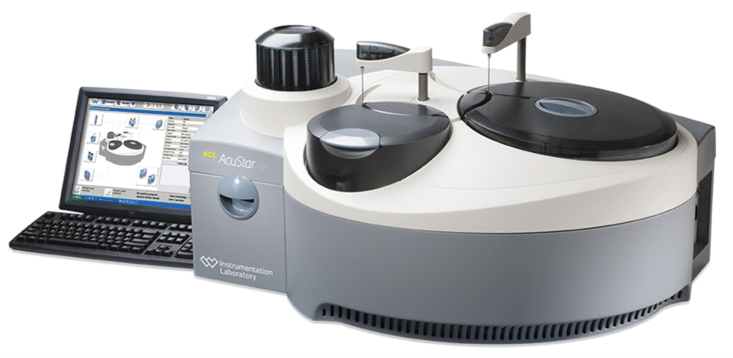
HemosIL AcuStar HIT-IgG(PF4-H). Source: fda.gov
Performance problems could produce false-negative results, potentially delaying diagnosis of a dangerous reaction to heparin.
The U.S. Food and Drug Administration (FDA) has identified a recall of certain lots of the HemosIL AcuStar HIT-IgG(PF4-H) diagnostic test, manufactured by Instrumentation Laboratories (Werfen), as the most serious type of medical device recall.
The recall involves a performance problem that could cause the test to incorrectly report negative results in patients being evaluated for heparin-induced thrombocytopenia (HIT), a potentially life-threatening reaction to the blood-thinning medication heparin.
Why the Recall Matters
Heparin is commonly used in hospitals to prevent or treat blood clots. In some patients, however, it can trigger an immune reaction that reduces platelet counts and increases the risk of dangerous blood clots.
The HemosIL AcuStar HIT-IgG(PF4-H) test helps clinicians evaluate patients for this condition by detecting antibodies associated with HIT.
According to the FDA, customer complaints identified problems with test calibration and inaccurate results. Werfen subsequently confirmed that certain lots could produce results with a negative bias of 20% to 35%, meaning the test could report antibody levels lower than their actual values.
More concerning, the problem may not be reliably detected through routine calibration and quality control testing.
As a result, some patient samples could be incorrectly reported below the test’s cutoff of 1.00 U/mL and interpreted as negative for HIT antibodies.
A false-negative result could delay recognition of HIT and influence treatment decisions. Continued heparin exposure in a patient with HIT could increase the risk of serious thrombotic complications.
Products Affected
The recall affects four lots of HemosIL AcuStar HIT-IgG(PF4-H):
| Part number | Affected lot | Expiration date |
| 0009800127 | B40005 | January 16, 2027 |
| 0009800127 | B38062 | November 1, 2026 |
| 0009802028 | B40006 | January 16, 2027 |
| 0009802028 | B38063 | November 1, 2026 |
Actions for Healthcare Facilities
Werfen has instructed affected customers to identify and destroy remaining products from the recalled lots, document the destruction, and arrange alternative HIT antibody testing methods. The company has also warned that a supply interruption is expected. Werfen’s investigation into the root cause remains ongoing.
Laboratories and treating clinicians should determine whether previously reported patient results require review, follow-up, or repeat testing based on clinical judgment and applicable procedures.
As of September 3, 2026, the company had reported no serious injuries or deaths associated with the issue.
Regulatory Intelligence Perspective
This recall illustrates an important challenge involving diagnostic devices, that a test can produce an apparently valid result even when its analytical performance is compromised. The reported negative bias is particularly concerning because routine calibration and quality control procedures may not reliably identify the problem.
For diagnostic manufacturers and clinical laboratories, the recall underscores the importance of investigating performance complaints, evaluating potential effects on previously reported patient results, and assessing whether existing quality controls are capable of detecting clinically significant failures.
The case also demonstrates why postmarket surveillance and effective corrective action processes are essential throughout a diagnostic device’s commercial life.
Additional information
U.S. customers may contact Werfen Client Services at 1-800-955-9525. FDA recall information is available through the agency’s Medical Device Recalls and Early Alerts website.
FDA Issues Warning on Counterfeit Botox Products
Real Botox PackagingReal Botox Cosmetic PackagingReal Botox PackagingCounterfeit Botox Products The U.S. Food and Drug Administration (FDA) has issued a critical alert concerning the presence of counterfeit Botox products in various states, posing severe risks to...
FDA Approves XACT Carotid Stent System
A Breakthrough for Stroke Prevention Abbott Vascular Inc. has received FDA approval for its groundbreaking XACT Carotid Stent System, a significant advancement in stroke prevention technology. Approved on February 7, 2024, this innovative system offers new hope for...
FDA’s Orphan Drug Program
Expedite Development of New Orphan Drugs The FDA's Orphan Drug Program is designed to encourage the development of drugs and biologics for the treatment, diagnosis, or prevention of rare diseases or conditions, often referred to as orphan diseases. Here are the key...
Health Alert Regarding Rare Pregnancy Complication
FDA Safety Communication In a recent health safety alert, the U.S. Food and Drug Administration (FDA) has cautioned healthcare professionals about the rare risk of intrahepatic cholestasis of pregnancy (ICP) associated with the use of thiopurines, including...
Risks with Exactech Equinoxe Shoulder System
FDA Safety Communication April 19 Update: Exactech has initiated a recall to remove Equinoxe Shoulder System devices packaged in the defective bags from facilities’ unused inventory. To see if your device is affected by the recall, visit Exactech’s Recall...
FDA – Do Not Use Non-piercing Devices to Measure Blood Glucose
FDA Safety Communication On February 21, 2024 the U.S. Food and Drug Administration (FDA) issued a safety communication regarding the use of smartwatches or smart rings that claim to measure blood glucose levels without the need for skin piercing. Its cautionary...
Urgent Recall Notice for ARROW QuickFlash Catheterization Kits
Urgent Recall Notice for ARROW QuickFlash Catheterization Kits In February 2024, Teleflex and its subsidiary Arrow International issued an urgent recall notice for the ARROW QuickFlash Radial Artery and Radial Artery/Arterial Line Catheterization Kits. Today, a...
Plastic Syringe Safety: FDA’s Ongoing Evaluation
Today, the U.S. Food and Drug Administration (FDA) provided a crucial update regarding the quality and performance issues associated with plastic syringes made in China. This announcement follows the agency's previous safety communication issued on November 30, 2023,...
Original FDA Safety Warning for China-made Syringes
In an announcement dated November 30, 2023, the U.S. Food and Drug Administration (FDA) issued a notice regarding the evaluation of potential device failures associated with plastic syringes manufactured in China. The FDA is actively collecting and analyzing data to...
FDA Warns of Risks with OTC Pain Relief Products
The U.S. Food and Drug Administration (FDA) has issued a stern warning to consumers regarding the use of certain over-the-counter analgesic (pain relief) products intended for topical use before, during, or after various cosmetic procedures like microdermabrasion,...