Quest Cat Food Recall Expanded Due to Low Thiamine Levels
On February 26, 2026, Go Raw LLC expanded its voluntary recall of certain Quest Diet Cat Food products after identifying potentially low levels of thiamine (Vitamin B1), an essential nutrient for feline health.
In addition to expanding the recall, the company has enacted a stop sale of all Quest products until the nutritional issue is fully addressed.
What Is Being Recalled
The recall now includes the previously recalled products in addition to products that were added to the recall.
Previously Recalled
- Quest Cat Food Chicken Recipe Freeze-Dried – 10 oz
- Lot #C25288
- Best By: October 15, 2027
Newly Added to Recall
- Quest Cat Food Chicken Recipe Frozen Diet – 2 lb
- Lot: MCD25350 (Best By: June 16, 2027)
- Lot: MCC25321 (Best By: May 17, 2027)
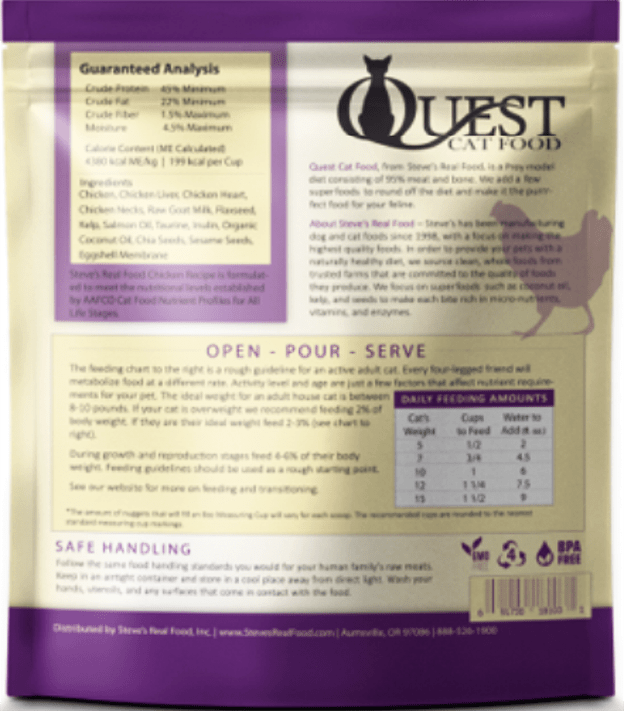
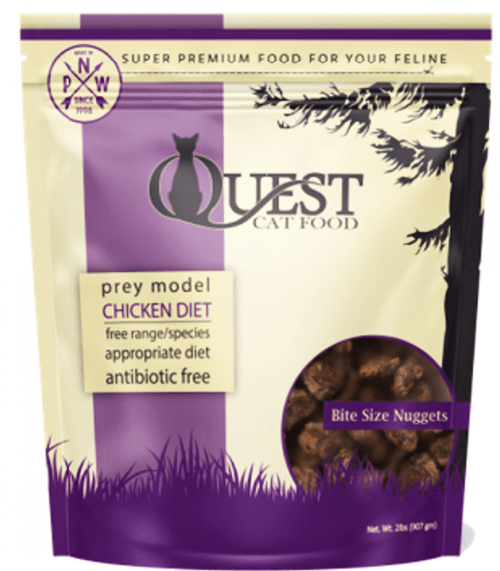
These products were sold nationwide in beige, zip-lock 2 lb bags with a purple stripe.
Distribution included retail locations across multiple states, including CA, TX, NY, FL, IL, WA, UT, MI, PA, and others.
Why This Matters
Thiamine (Vitamin B1) is essential for cats, and deficiency can lead to serious health complications.
Early signs of thiamine deficiency include loss of appetite, vomiting, weight loss, excess salivation, and failure to grow.
Advanced symptoms can include neurological changes, neck weakness (ventroflexion), wobbly gait, vision changes, and seizures.
If treated promptly, thiamine deficiency is typically reversible. This makes early identification critical.
Company Actions
Upon identifying low thiamine levels in early February, Go Raw LLC initiated a product investigation, expanded the recall, instructed retailers to remove affected inventory, implemented a stop sale of all Quest products, and began reformulating affected products.
Replacement inventory is expected to enter distribution channels in mid-March.
Guidance for Pet Owners
Consumers should stop feeding affected products immediately, return recalled items for refund or replacement, and contact a veterinarian if symptoms of deficiency appear.
MDP Veterinary Insight
This event underscores an important reality in the regulated animal health space. Nutritional adequacy is a safety issue, not just a labeling one.
Unlike contamination recalls, micronutrient deficiencies may not produce immediate visible harm but can lead to significant clinical outcomes over time.
For manufacturers, this highlights the importance of ingredient verification, nutritional stability controls, supplier oversight, and process validation.
As FDA and state regulators continue to emphasize pet food safety, formulation integrity and nutrient verification are becoming increasingly central to compliance risk management.