
Baxter Issues Updated Use Instructions for Volara Ventilator Circuits Following Serious Injury Reports
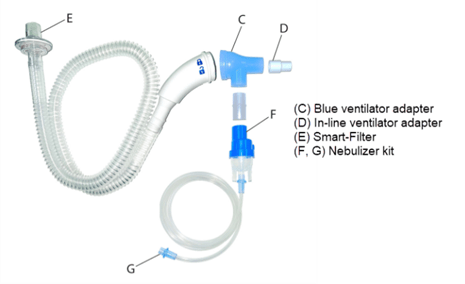
Baxter International has issued an Urgent Medical Device Correction for its Volara respiratory therapy system, specifically involving single-patient use circuits (Blue Ventilator Adaptor Module, Product Code M07937) used in conjunction with ventilators.
The U.S. Food and Drug Administration has classified this action as a Class I recall, the most serious type, indicating that continued use without adherence to updated instructions may cause serious injury or death.
Importantly, this is a field correction, not a product removal. Devices remain in use, but updated Instructions for Use (IFU) must be followed.
What Changed
Baxter updated use instructions for all affected Volara circuits after identifying risks associated with in-line use with ventilators in home care settings. The correction includes an updated IFU addendum, additional warnings for patient populations, reinforced monitoring requirements, and required training and acknowledgment by users.
Risk Overview
Baxter identified two primary risks when the Volara system is used in-line with a ventilator. The risks are oxygen desaturation (reduced oxygen levels) and barotrauma (lung injury from overexpansion).
These risks arise because the Volara system introduces additional flow and pressure, which may interfere with ventilator performance and therapy accuracy.
Reported Events
Seven serious injuries were reported between May 2022 and March 2026. No deaths were reported in this updated correction. Prior reporting for events in 2022 included one serious injury and two deaths.
Required Actions for Patients and Caregivers
Patients using the Volara system in-line with a ventilator should continue therapy as prescribed by their physician and carefully review the updated IFU addendum. Patients and caregivers should also monitor for signs of respiratory distress, including an increased breathing rate, wheezing, a bluish discoloration of the lips or nails, reduced oxygen saturation, or changes in alertness.
If symptoms occur, stop therapy immediately and seek medical attention if symptoms do not improve.
Additional Safeguards
Baxter is implementing direct communication with all affected users, access to 24/7 clinical support, in-home training by clinical patient trainers, and confirmation of understanding of updated instructions.
Regulatory Insight (MDP Perspective)
This correction highlights several critical regulatory and quality system themes.
System Integration Risk
Combining devices (Volara + ventilator) introduces complex interactions not always fully predictable during initial design.
Importance of IFU Clarity
In home care environments, instructions must account for non-clinical users (patients/caregivers).
Post-Market Surveillance
This issue underscores how real-world use reveals risks that may not emerge during premarket evaluation.
Training as a Risk Control
The requirement for IFU acknowledgment that includes in-home training demonstrates that user behavior is a critical control point.
Bottom Line
The Volara correction is a strong example of how device performance, user interaction, and system integration must be continuously evaluated in real-world conditions. For manufacturers, this reinforces the need for robust risk management, clear labeling and instructions, and effective post-market monitoring.
Contact Information
U.S. customers with questions should contact Baxter at 800-397-9071 for clinical support.
Links
Read the FDA’s announcement here.

Intersurgical 22mm Smoothbore Breathing Tubes and Systems
FDA Issues Early Alert for Intersurgical Breathing Systems Over Potential Ventilation Failure. Manufacturing defect may cause breathing tube connectors to separate during use, potentially interrupting ventilation and exposing patients to serious injury or death.The...
FDA Early Alert: Teleflex/Arrow Guidewire
Affected guidewires and catheter products may release hydrophilic polymer particles into the bloodstream, potentially causing serious injury or death. No serious injuries or deaths have been reported.The U.S. Food and Drug Administration (FDA) has issued an Early...
FDA Investigates Cancer Risk with Zolgensma Gene Therapy
Postmarketing reports identify cases of tumor formation linked to gene therapy vector integration, prompting FDA to evaluate potential regulatory action.The U.S. Food and Drug Administration (FDA) is investigating a serious potential cancer risk associated with...
Eugia Vancomycin Recall: Glass Particle Contamination
FDA announces voluntary recall of a single lot of vancomycin hydrochloride for injection because of potentially dangerous particulate contamination.Eugia US LLC, formerly Auro Medics Pharma LLC, has initiated a voluntary nationwide recall of one lot of Vancomycin...
FDA Requires New GLP-1 Drug Warning for Vision Loss Risk
Agency cites potential increased risk of rare optic nerve condition following review of clinical trials and postmarket safety dataThe U.S. Food and Drug Administration (FDA) is requiring manufacturers of all glucagon-like peptide-1 receptor agonist (GLP-1 RA)...
Class 1 Recall for HemosIL AcuStar HIT Antibody Test
HemosIL AcuStar HIT-IgG(PF4-H). Source: fda.govPerformance problems could produce false-negative results, potentially delaying diagnosis of a dangerous reaction to heparin.The U.S. Food and Drug Administration (FDA) has identified a recall of certain lots of the...