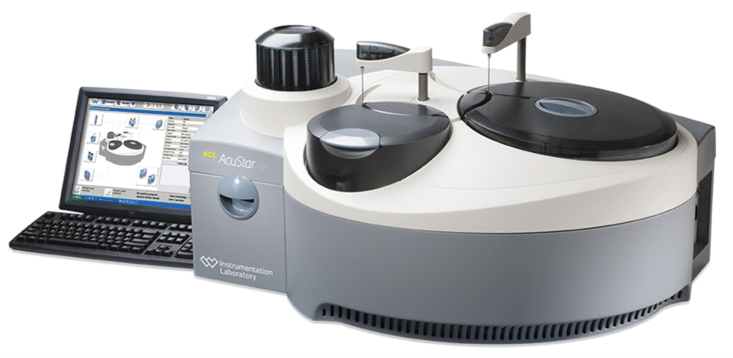
HemosIL AcuStar HIT-IgG(PF4-H). Source: fda.gov
Performance problems could produce false-negative results, potentially delaying diagnosis of a dangerous reaction to heparin.
The U.S. Food and Drug Administration (FDA) has identified a recall of certain lots of the HemosIL AcuStar HIT-IgG(PF4-H) diagnostic test, manufactured by Instrumentation Laboratories (Werfen), as the most serious type of medical device recall.
The recall involves a performance problem that could cause the test to incorrectly report negative results in patients being evaluated for heparin-induced thrombocytopenia (HIT), a potentially life-threatening reaction to the blood-thinning medication heparin.
Why the Recall Matters
Heparin is commonly used in hospitals to prevent or treat blood clots. In some patients, however, it can trigger an immune reaction that reduces platelet counts and increases the risk of dangerous blood clots.
The HemosIL AcuStar HIT-IgG(PF4-H) test helps clinicians evaluate patients for this condition by detecting antibodies associated with HIT.
According to the FDA, customer complaints identified problems with test calibration and inaccurate results. Werfen subsequently confirmed that certain lots could produce results with a negative bias of 20% to 35%, meaning the test could report antibody levels lower than their actual values.
More concerning, the problem may not be reliably detected through routine calibration and quality control testing.
As a result, some patient samples could be incorrectly reported below the test’s cutoff of 1.00 U/mL and interpreted as negative for HIT antibodies.
A false-negative result could delay recognition of HIT and influence treatment decisions. Continued heparin exposure in a patient with HIT could increase the risk of serious thrombotic complications.
Products Affected
The recall affects four lots of HemosIL AcuStar HIT-IgG(PF4-H):
| Part number | Affected lot | Expiration date |
| 0009800127 | B40005 | January 16, 2027 |
| 0009800127 | B38062 | November 1, 2026 |
| 0009802028 | B40006 | January 16, 2027 |
| 0009802028 | B38063 | November 1, 2026 |
Actions for Healthcare Facilities
Werfen has instructed affected customers to identify and destroy remaining products from the recalled lots, document the destruction, and arrange alternative HIT antibody testing methods. The company has also warned that a supply interruption is expected. Werfen’s investigation into the root cause remains ongoing.
Laboratories and treating clinicians should determine whether previously reported patient results require review, follow-up, or repeat testing based on clinical judgment and applicable procedures.
As of September 3, 2026, the company had reported no serious injuries or deaths associated with the issue.
Regulatory Intelligence Perspective
This recall illustrates an important challenge involving diagnostic devices, that a test can produce an apparently valid result even when its analytical performance is compromised. The reported negative bias is particularly concerning because routine calibration and quality control procedures may not reliably identify the problem.
For diagnostic manufacturers and clinical laboratories, the recall underscores the importance of investigating performance complaints, evaluating potential effects on previously reported patient results, and assessing whether existing quality controls are capable of detecting clinically significant failures.
The case also demonstrates why postmarket surveillance and effective corrective action processes are essential throughout a diagnostic device’s commercial life.
Additional information
U.S. customers may contact Werfen Client Services at 1-800-955-9525. FDA recall information is available through the agency’s Medical Device Recalls and Early Alerts website.
FDA Cracks Down on Illegally Marketed 7-OH Products
Unapproved drugs sold online and in retail locations Yesterday the U.S. Food and Drug Administration (FDA) issued seven warning letters to companies marketing products that contain 7-hydroxymitragynine (7-OH) — a powerful and potentially dangerous opioid-like...
Sterile Drug Manufacturing Violations at Daewoo Pharmaceutical
FDA Cracks Down on Sterile Drug Manufacturing Violations The U.S. Food and Drug Administration (FDA) has issued a warning letter to Daewoo Pharmaceutical Co., Ltd. in Busan, South Korea, citing serious and widespread violations of current Good Manufacturing Practices...
Mechanical Circulatory Support (MCS) Devices
Overview of MCS Devices Mechanical Circulatory Support (MCS) devices have transformed the landscape of advanced heart failure treatment. From temporary stabilization in cardiogenic shock to long-term support as destination therapy, these technologies bridge critical...
Recall Alert: AirLife/Vyaire Infant Breathing Systems
Class I Recall AirLife and manufacturer Vyaire are recalling specific Infant Heated Wire Circuits due to the risk that accessory adapters may disconnect during use, especially once the system reaches operating temperature. This could lead to serious injury or death,...
Avanos Recalls Ballard Closed Suction Systems
May result in non-sterile devices Avanos Medical, Inc. is recalling its Ballard Closed Suction Systems after identifying a failure in the sterilization process, which may result in non-sterile devices. Use of these products could lead to serious health risks,...
FDA Alert: Abiomed Impella Blood Pump Controller
Abiomed Impella blood pump controllers Controller May Fail to Detect Device Abiomed has issued an urgent safety notice for its Automated Impella Controller (AIC) due to a potentially serious issue where the system may fail to detect the Impella blood pump when...
GE HealthCare Anesthesia Systems Recall Due to Ventilation Risk
GE Carestation Anesthesia Systems GE HealthCare has issued a high-priority correction for certain Carestation anesthesia systems due to a potentially life-threatening risk when used in Volume Control Ventilation (VCV) mode. Affected Devices Carestation 620, 650, 650c...
EU MDR Compliance Consulting Services
Medical Devices and Pharma offers comprehensive services to help your business meet the stringent requirements of the EU Medical Device Regulation (MDR). Our expertise ensures that your products are compliant, safe, and ready for the European market.At Medical Devices...
Extensions for EU MDR and IVDR Implementation
Initial EU MDR and IVDR transition periods extended In 2023, the European Union granted an extension for the implementation of the Medical Device Regulation (MDR) and the In Vitro Diagnostic Medical Device Regulation (IVDR) due to various challenges faced by...
Implementation of the EU MDR and IVDR
A Significant EU Regulatory System Overhaul The implementation of the European Union's Medical Device Regulation (MDR) and In Vitro Diagnostic Medical Device Regulation (IVDR) represents a significant overhaul of the regulatory framework governing medical devices and...