Resmed Ventilator
Patients should continue using devices unless instructed otherwise by their healthcare provider
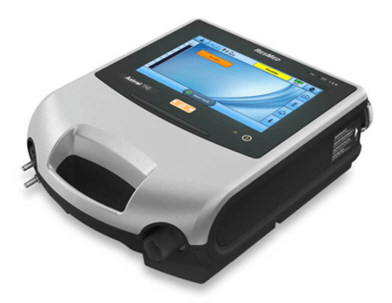
The U.S. Food and Drug Administration (FDA) has issued an Early Alert regarding a potentially high-risk issue affecting certain Resmed Astral 100 and Astral 150 ventilators, warning that a component failure could cause the devices to stop delivering life-sustaining ventilation.
The affected ventilators are used in homes, hospitals, and portable settings to provide continuous or intermittent ventilatory support for adults and children weighing more than 5 kilograms. Because many patients depend on these devices to breathe, interruption of therapy could result in serious injury or death.
What Is the Problem?
According to Resmed, a component known as a supercapacitor may leak over time in certain ventilators manufactured before October 2024.
If leakage damages the printed circuit board assembly (PCBA), the ventilator may unexpectedly enter a fail-safe state, causing an immediate interruption of ventilation therapy, activation of a high-priority audible alarm, system fault messages, and the inability to restart therapy
If the device fails while in standby mode, ventilation may not begin when therapy is initiated.
Patients unable to breathe independently are at greatest risk if backup ventilation is not immediately available.
As of June 23, Resmed has reported 5 serious injuries and no deaths associated with the issue.
FDA and Resmed Recommendations
FDA emphasizes that patients should not stop using their ventilator unless instructed by their treating clinician.
Instead, patients and caregivers should continue prescribed therapy while ensuring backup ventilation equipment is immediately available, verify caregivers are trained to respond to alarms and emergencies, and wait for their healthcare provider or equipment supplier to arrange inspection or corrective action.
Healthcare providers are being instructed to identify affected ventilators, prioritize patients based on clinical risk, and implement a phased inspection and repair program.
Supply Constraints Delay Repairs
Resmed reports that replacement printed circuit boards are currently in limited supply.
Because sufficient replacement parts are not yet available to repair every affected ventilator immediately, the company is implementing a risk-based phased correction strategy, prioritizing patients at highest clinical risk first.
The shortage is also expected to reduce availability of new Astral ventilators, prompting healthcare providers to consider alternative ventilator options for new patients whenever possible.
Why It Matters
This alert highlights the challenges manufacturers and regulators face when a serious design issue affects life-sustaining medical devices.
Rather than immediately removing affected ventilators from service, FDA and Resmed determined that for many patients, continuing therapy with appropriate backup equipment is safer than discontinuing use, particularly while replacement parts remain unavailable.
The agency continues to evaluate the issue and has indicated additional corrective actions may be announced as more information becomes available.
Links
Read the FDA Early Alert here.
Pharmacal Recalls MG217 Eczema Cream
Pharmacal Recalls MG217 Eczema Cream Due to Staphylococcus aureus ContaminationFDA posts nationwide recall after microbial contamination found in topical skin treatment Pharmacal has voluntarily recalled one lot of MG217 Multi-Symptom Treatment Cream & Skin...
First T-Cell Therapy to Reduce Disease after Cell Transplant
FDA Approves First Regulatory T-Cell Therapy to Reduce Chronic Graft-versus-Host Disease After Stem Cell TransplantThe First Regulatory T (Treg) Cell-Based Immunotherapy The U.S. Food and Drug Administration (FDA) has approved Tregzi, the first regulatory T (Treg)...
FDA Warning Letter to AHC Products, Inc. for CGMP Violations
FDA Warning Letter to AHC Products, Inc. for CGMP Violations The U.S. Food and Drug Administration (FDA) has issued a Warning Letter to AHC Products, Inc. of Winchester, Kentucky, citing significant violations of Current Good Manufacturing Practice (CGMP) regulations...
Cefazolin Injection Recalled Due to Cardboard in Sterile IV Solution
Baxter Recalls Cefazolin Injection Sterile IV SolutionCardboard Particulate Matter Found in a Sterile Intravenous Infusion Bag Baxter International has voluntarily recalled one lot of Cefazolin in Dextrose Injection, USP, 2 g/100 mL after a report of cardboard...
Product Safety Agency Demands Patients’ ER Hospital Records
Trump Administration Demands Hospitals Share Emergency Room Records
Moringa Capsules Recalled for Potential Salmonella Contamination
Zen Principle Recalls Moringa Capsules After FDA Detects Salmonella in Raw Ingredient Relay Peak Research LLC, doing business as Zen Principle Naturals, has voluntarily recalled one lot of its Zen Principle® Moringa Capsules after learning that the raw moringa leaf...