
Human Factors Engineering - HFE
A critical device design activity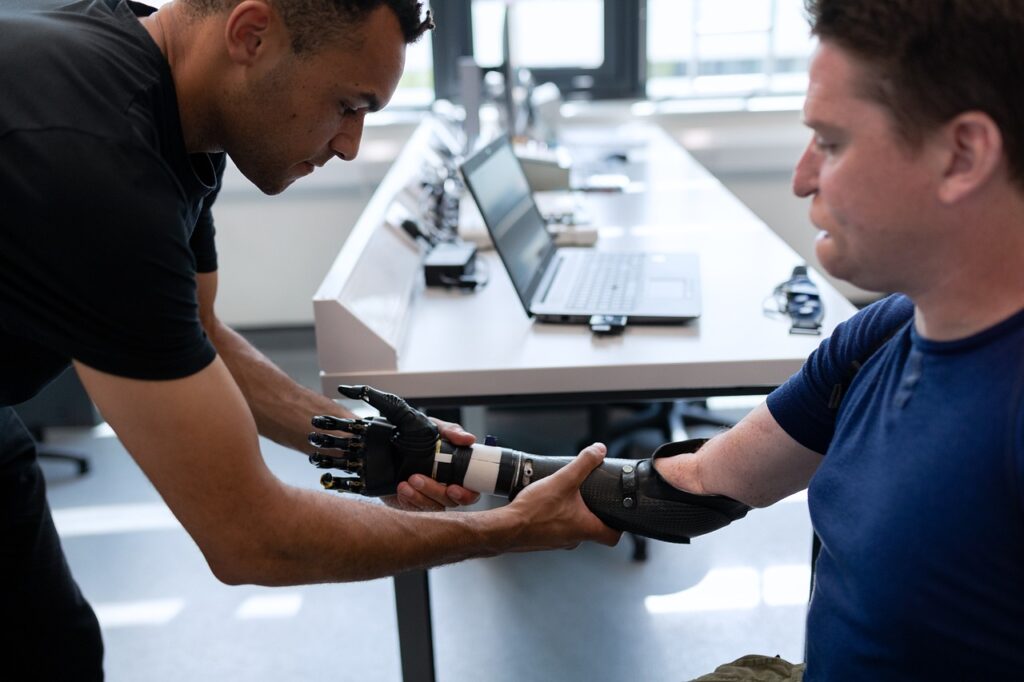
Human Factors Engineering
Human Factors Engineering (HFE) is critical for medical device safety and regulatory compliance, especially for Class II and III devices, drug-delivery systems, and combination products. Following is a detailed breakdown of the regulatory expectations and functional components of HFE.
What is Human Factors Engineering?
Human Factors Engineering (HFE)—also called Usability Engineering (UE)—is the application of knowledge about human behavior, capabilities, and limitations to ensure that devices:
- Are safe and effective for intended users,
- Minimize use-related risks, and
- Can be used without unintended harm or user error.
When a “Good Enough” Design May Not Be Sufficient
Many times, a solid basic design may not completely fulfill the needs of its users. Read about a common Class I device that standards and regulations would typically not require a risk/usability analysis may be insufficient for the needs of its users.
Regulatory Requirements and Guidance
FDA (U.S.)
The FDA regulates HFE under 21 CFR 820.30 (Design Controls) and defines it primarily through guidance documents.
Key FDA Guidance
- “Applying Human Factors and Usability Engineering to Medical Devices” (2016)
- “Human Factors Studies and Related Clinical Study Considerations” (2020)
- Guidance for new devices, PMA submissions, 510(k)s (if new user interface), and De Novo devices.
FDA Expectations
Employ a risk-based approach to identify critical tasks. Human factors validation testing must demonstrate that intended users can use the device safely and effectively without prior training (unless training is part of the intended use).
Documentation
- HFE/UE report with PMA or 510(k),
- Validation testing protocols, results, and rationale for user groups.
Devices with user interfaces (buttons, displays, connectors, software, alarms, etc.) must undergo HFE validation.
International (Global)
ISO & IEC Standards
- ISO 14971: Risk management (HFE is a mitigation tool).
- IEC 62366-1: Application of usability engineering to medical devices (widely accepted globally, harmonized in the EU).
- IEC/TR 62366-2: Guidance on application of usability engineering.
EU MDR
HFE is addressed under General Safety and Performance Requirements (GSPRs) in Annex I, including:
- Minimization of use error,
- Device usability under normal and fault conditions,
- Consideration of ergonomic features.
Other regions
- Health Canada, PMDA (Japan), and NMPA (China) expect similar alignment with IEC 62366-1 and ISO 14971.
When is an HFE Required?
|
Device Type |
HFE Required? |
Notes |
| Class I | Rarely | Unless has complex UI |
| Class II | Often | Especially for home-use, digital, or drug-delivery devices |
| Class III | Always | PMA requires robust HFE/UE documentation |
| Combination Products | Always | Especially drug-delivery (pens, pumps, injectors) |
| Digital Health Software | Yes | Apps, decision-support tools, UI-dependent devices |
Now the Salmonella in Moringa Is Drug-Resistant
Now the Salmonella in Moringa Is Drug-Resistant. That Changes the Stakes. An MDP Consumer and Industry Brief Salmonella contamination is serious in any consumer product. But one of the most concerning developments in the latest moringa-related outbreak investigation...
Why These Salmonella Outbreaks Keep Happening
Why These Salmonella Outbreaks Keep Happening: “Illness First, Controls Later” An MDP Consumer and Industry Brief When people hear “FDA is investigating,” they often assume the system detected a safety problem early and intervened. In many dietary supplement...
Four Moringa-Linked Salmonella Events in Four Months
Four Moringa-Linked Salmonella Events in Four Months: The Timeline That Should Not Exist An MDP Consumer and Industry Brief A single recall can be dismissed as a one-time failure. Two recalls in the same ingredient category raise questions. But when moringa-based...
Key Functional Components of the HFE Process
|
Stage |
Description |
Activities |
| 1. User & Use Environment Analysis | Identify intended users, use scenarios, and use environments | Interviews, surveys, user profiles, task analysis |
| 2. Hazard Identification (Use Errors) | Identify potential use errors and hazards | Link to risk management (ISO 14971) |
| 3. Preliminary Usability Testing | Early testing with prototypes | Formative studies, heuristic evaluations |
| 4. Design Iteration | Refine UI and device based on feedback | UI redesign, labeling adjustments, feedback loops |
| 5. Validation (Summative Testing) | Demonstrate users can safely use the device | Simulated-use testing (≥15 representative users per group) |
| 6. Documentation & Submission | Report HFE findings and validation | Submit HFE/UE report with regulatory submission |
Human Factors/Usability Report
FDA and global reviewers expect a report to contain the following documentation:
- Summary of use-related hazards
- User population analysis
- Use environment details
- Critical task identification
- Formative test results
- Final validation protocol & results
- Labeling/instructions of use impact
Critical Tasks = tasks that, if performed incorrectly or not performed at all, could result in serious harm to the user or patient.
HFE Validation Testing Best Practices
- Conduct in a realistic simulated-use environment
- Use representative users (e.g., patients, caregivers, clinicians)
- No training immediately before testing unless training is part of actual use
- Collect both success/failure and behavioral data (e.g., hesitations, workarounds)
- Capture root cause analysis for any errors or difficulties