
QMSR Vocabulary and Definitions
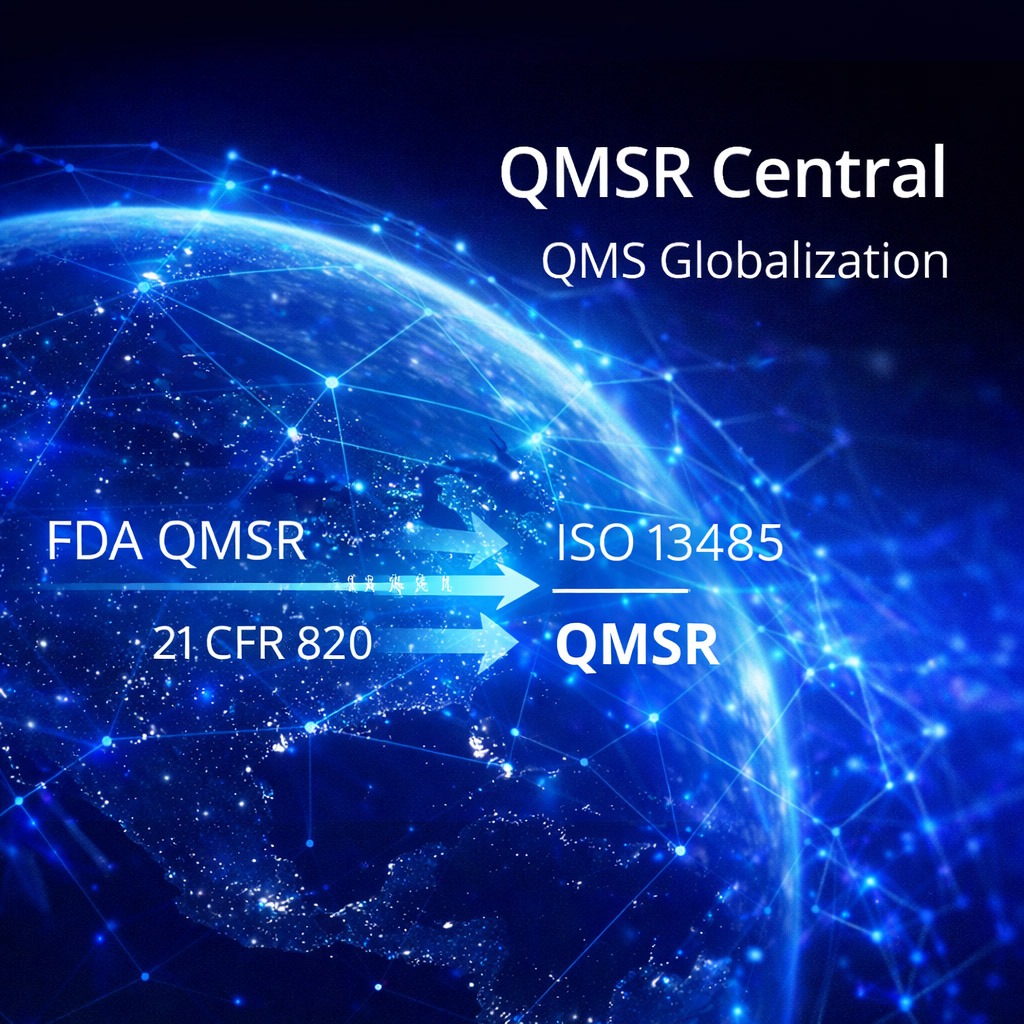
QMS Globalization
One of the most important and often overlooked aspects of QMSR is the hierarchy of definitions established by the FDA.
The QMSR Hierarchy of Definitions
One of the most important, and often overlooked, aspects of QMSR is the hierarchy of definitions established by the FDA. When QMS terms overlap or conflict, the following hierarchy applies.
FD&C Act (Highest Authority)
Definitions in the Federal Food, Drug, and Cosmetic Act take precedence over all others. These include foundational terms such as Device, Manufacturer, and Label / Labeling. These definitions are legally binding and cannot be overridden by ISO terminology.
21 CFR Part 820 (QMSR-Specific Definitions)
The QMSR retains certain FDA-specific definitions necessary for regulatory clarity and enforcement. Examples include Component, Finished device, Remanufacturer, Rework (with FDA-specific limitations), and Human cell, tissue, or cellular/tissue-based products (HCT/Ps).
These definitions often reflect FDA enforcement priorities and distinctions not captured in ISO standards.
ISO 13485:2016
ISO 13485 provides the primary structure and vocabulary for quality management systems. Examples include Risk and risk management, Complaint, Post-market surveillance, Supplier and purchased product, and Sterile medical device. These definitions form the operational backbone of the QMS.
ISO 9000:2015 (Supplemental)
ISO 9000 serves as a supporting reference for general quality management terminology. Examples include Audit, Continual improvement, Documented information, and Objective evidence. ISO 9000 terms are typically referenced when additional clarity is needed beyond the definitions provided in ISO 13485.
FDA-Specific Terminology Considerations
While QMSR aligns with ISO standards, the FDA has deliberately retained or modified certain definitions to preserve regulatory intent. Key examples follow.
Rework
FDA limits “Rework” to products not yet released for distribution. Post-release corrections are handled under different regulatory frameworks. This distinction is critical during inspections.
Finished Device
A device may be considered “Finished” even if not packaged or sterilized. If it can function, it meets the definition. This impacts traceability, device records, and regulatory classification.
Organization vs Manufacturer
ISO uses the term “Organization,” which FDA aligns with “Manufacturer.” This difference is important to understand when interpreting responsibilities under the QMSR.
Terms Removed or Replaced from the QSR
Several QSR terms have been eliminated or replaced. “Special process” is no longer used, “Obsolete product” was removed, and “Establish” was replaced by ISO-aligned terminology. These replacements and removals reflect a shift toward streamlined, globally consistent language and terminology.
Key QMSR Terminology Changes and Interpretations
|
Legacy QSR Term |
QMSR / ISO Term |
Key Insight |
|
Design History File (DHF) |
Design and Development File (DDF) |
Reflects lifecycle integration vs static record |
|
Device History Record (DHR) |
Device Batch Record / Lot Record |
Aligns with production traceability concepts |
|
Medical Device Record (MDR) |
Medical Device File (MDF) |
Broader system-level documentation |
|
Management with Executive Responsibility |
Top Management |
Emphasizes leadership accountability |
|
Establish |
Documented Information |
Expands scope to include maintenance and control |
Why Terminology Matters in Practice
Terminology under QMSR is not theoretical, it directly impacts how procedures are written, records are structured, audits are conducted, and how FDA investigators interpret compliance.
Organizations that fail to align terminology often experience inconsistent documentation, miscommunication across teams, increased audit findings, and inspection observations tied to interpretation gaps.
A Practical Approach to Terminology Alignment
To effectively implement QMSR terminology, manufacturers should map legacy QSR terms to QMSR/ISO equivalents, update SOPs and quality manuals accordingly, train personnel on terminology changes, and ensure consistent usage across all documentation.
Terminology alignment should be treated as a controlled system change, not a simple editorial update.
Take the Next Step
A clear understanding of terminology is the foundation of QMSR compliance, but it must be paired with effective implementation.
Clauses 1-3 Product Realization
Scope, References, Definitions
Clause 4 Quality Management System
Structural and operational expectations
Clause 5 Management Responsibility
Leadership’s role in an effective QMS
Clause 6 Resource Management
Identify, provide, and maintain resources
Clause 7 Product Realization
The operational core of the QMS
Clause 8 Measure, Analyze, Improve
Risk, monitoring, and improvement

Available in paperback and eBook formats on Amazon.
Click on the image or this link to see the book on the Amazon website.