
QMSR Related Regulations and Standards
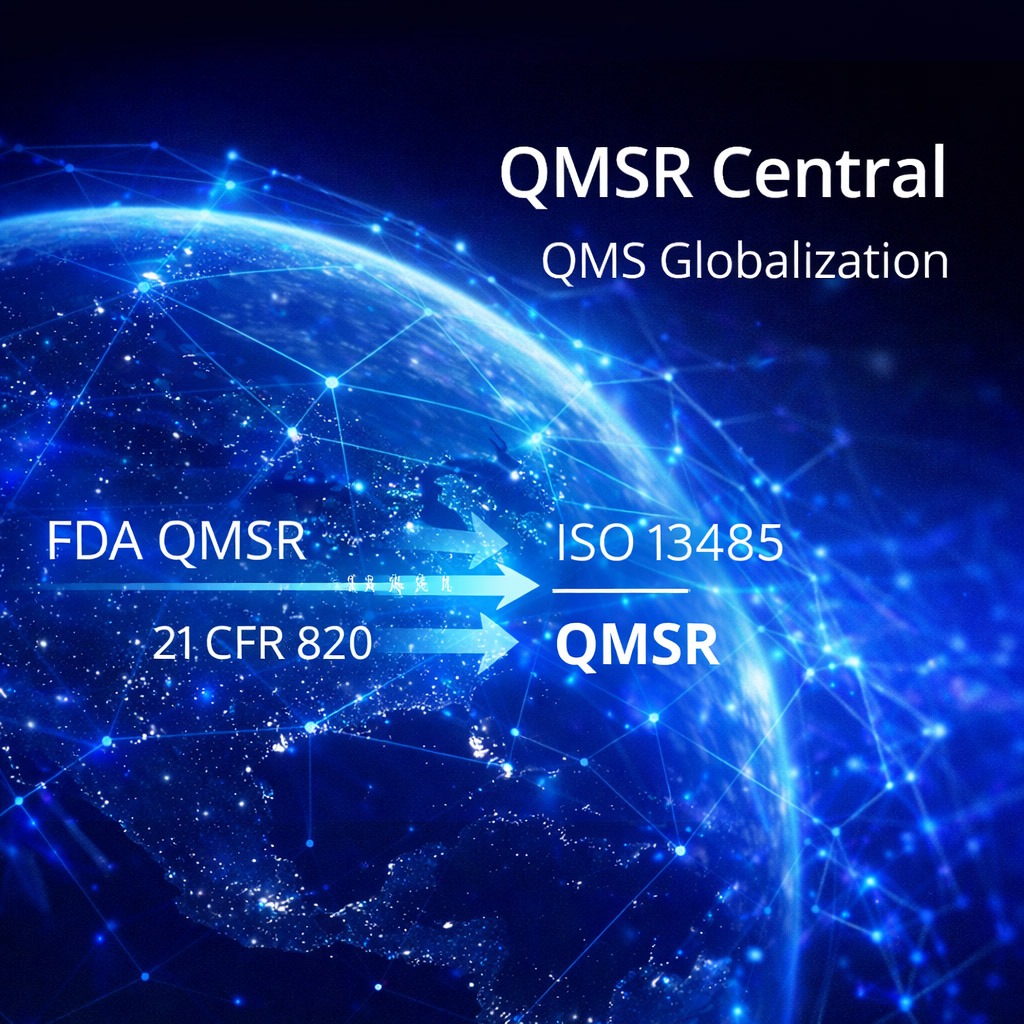
QMS Globalization
Affected Regulations and Standards
Understanding the Regulatory and Standards Framework Behind QMSR
The transition from the FDA’s Quality System Regulation (QSR) to the Quality Management System Regulation (QMSR) represents more than a regulatory update—it reflects a fundamental shift toward global harmonization of medical device quality systems.
At the center of this transition is the FDA’s decision to align its regulatory framework with ISO 13485:2016. However, QMSR does not exist in isolation. It operates within a broader ecosystem of U.S. laws, FDA regulations, and international standards that collectively define how medical devices are designed, manufactured, monitored, and improved throughout their lifecycle.
For manufacturers, understanding this ecosystem is essential. QMSR compliance requires not only alignment with ISO 13485 but also continued adherence to FDA-specific regulatory requirements governing reporting, traceability, postmarket surveillance, and enforcement.
The Foundation: U.S. Regulatory Framework
At the highest level, medical device regulation in the United States is grounded in the Food, Drug, and Cosmetic Act (FD&C Act), which provides the statutory authority for FDA oversight. From this foundation, the FDA establishes detailed regulatory requirements through Title 21 of the Code of Federal Regulations (21 CFR).
Core Quality System Regulations
21 CFR Part 820 (QSR)
The legacy Quality System Regulation currently governing medical device quality systems
21 CFR Part 820 (QMSR – effective February 2, 2026)
The modernized framework incorporates ISO 13485 by reference. The transition from QSR to QMSR represents a shift from a U.S.-centric regulation to a globally aligned quality system model.
Critical Supporting FDA Regulations
QMSR operates alongside several essential FDA regulations that remain fully applicable. These regulations define postmarket control, traceability, and regulatory accountability, which remain distinct from ISO 13485 requirements.
21 CFR Part 803 – Medical Device Reporting (MDR)
Requirements for reporting adverse events and device-related incidents.
21 CFR Part 806 – Corrections and Removals
Requirements for recalls and field corrective actions.
21 CFR Part 821 – Device Tracking
Traceability requirements for certain devices.
21 CFR Part 830 – Unique Device Identification (UDI)
Device identification and traceability across the supply chain.
21 CFR Part 4 – Combination Products
Regulatory framework for products that are a combination of drugs, devices, or biologics.
The Core Standard: ISO 13485:2016
ISO 13485:2016 serves as the structural backbone of the QMSR. It defines the architecture of a medical device quality management system, emphasizes risk-based thinking, process control, and lifecycle management, and provides a globally recognized framework for regulatory compliance.
However, ISO 13485 alone is not sufficient for FDA compliance. As noted earlier, organizations must still align with FDA-specific expectations for documentation, inspection readiness, and regulatory reporting.
Supporting ISO Standards and Technical Frameworks
ISO 13485 references and interacts with a range of supporting standards that address specific aspects of medical device quality and safety. These standards provide the technical depth and specificity required to implement an effective QMS under ISO 13485 and QMSR.
Risk Management and Usability
ISO 14971 – Risk management throughout the product lifecycle.
IEC 62366-1 – Usability engineering and human factors.
Manufacturing and Controlled Environments
ISO 14644 – Cleanroom classification and control.
ISO 14698 – Biocontamination control.
Packaging and Sterility
ISO 11607-1 / 11607-2 – Packaging validation and sterile barrier systems.
Measurement and Quality Assurance
ISO 10012 – Measurement management systems.
ISO 19011 – Auditing management systems.
Foundational Terminology
ISO 9000:2015 (Clause 3) – Quality management vocabulary and definitions.
How These Regulations and Standards Work Together
A common misconception is that QMSR replaces existing regulations or simplifies compliance into a single standard, but the regulatory framework is layered. The FD&C Act establishes legal authority, 21 CFR regulations define enforceable requirements, ISO 13485 provides system structure, and supporting ISO standards provide technical depth.
QMSR sits at the intersection of these layers, requiring manufacturers to integrate them into a single, coherent quality system
Implications for Manufacturers
Understanding this framework has direct operational implications. Quality systems must be designed to satisfy both ISO structure and FDA enforcement expectations. Postmarket and reporting requirements remain uniquely FDA-driven. And risk management and technical standards must be fully integrated into processes and not treated as separate activities.
Organizations that treat these elements as disconnected requirements often struggle with audit findings, inspection observations, and inconsistent documentation.
A Practical Approach to Integration
Successful manufacturers approach QMSR implementation by mapping regulatory requirements to ISO 13485 clauses, integrating supporting standards into procedures and workflows, ensuring traceability between design, risk, production, and postmarket activities, and building documentation that is both ISO-compliant and FDA inspection-ready.
Clauses 1-3 Product Realization
Scope, References, Definitions
Clause 4 Quality Management System
Structural and operational expectations
Clause 5 Management Responsibility
Leadership’s role in an effective QMS
Clause 6 Resource Management
Identify, provide, and maintain resources
Clause 7 Product Realization
The operational core of the QMS
Clause 8 Measure, Analyze, Improve
Risk, monitoring, and improvement

Available in paperback and eBook formats on Amazon.
Click on the image or this link to see the book on the Amazon website.