
QMSR for Small and Emerging Manufacturers
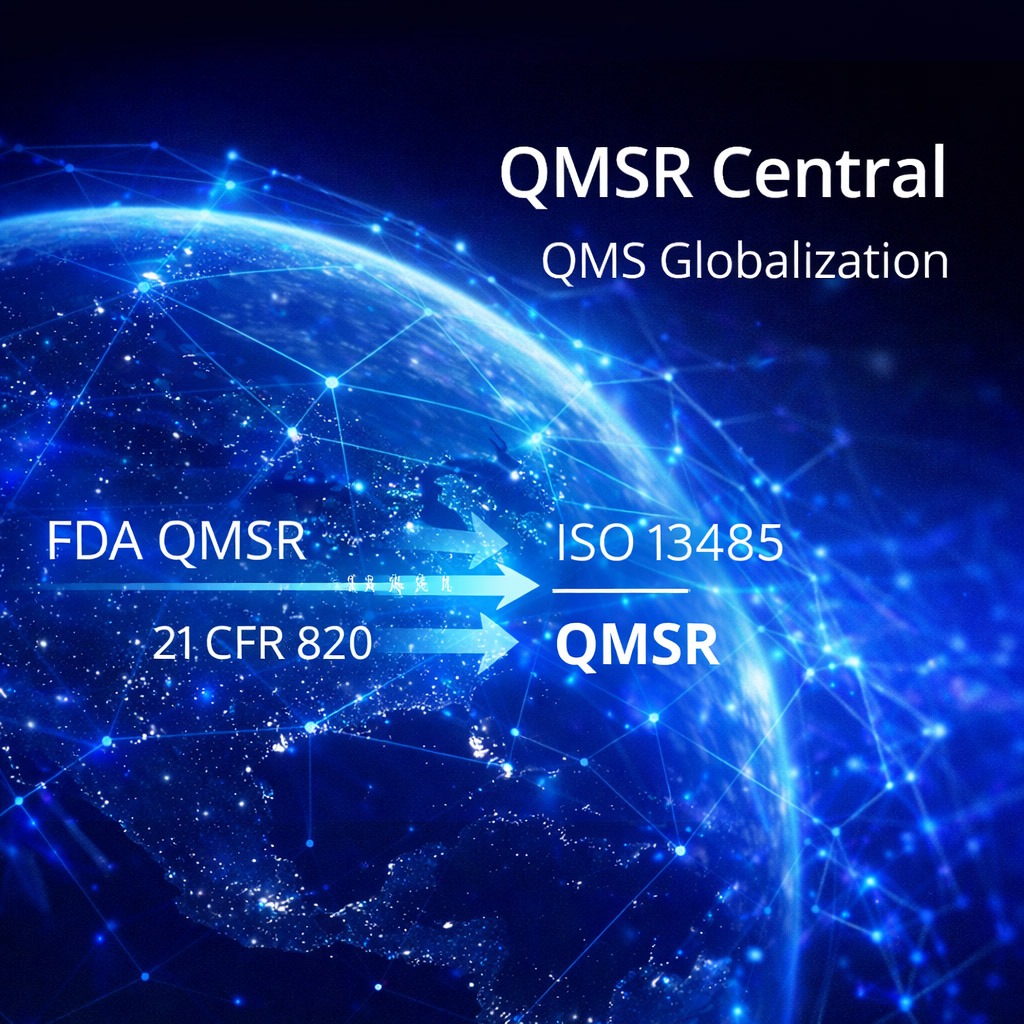
QMS Globalization
Practical, Scalable QMSR Compliance for Growing Medical Device Companies
Small and emerging medical device manufacturers face a unique challenge in transitioning to the FDA’s Quality Management System Regulation (QMSR). While the regulation aligns with ISO 13485:2016 and promotes global harmonization, the expectations for compliance remain rigorous—regardless of company size.
For smaller organizations, this creates a difficult balance: building a system that is robust enough to meet FDA requirements, while remaining efficient, scalable, and aligned with limited resources.
We specialize in helping small manufacturers achieve that balance.
Why QMSR is Different for Small Manufacturers
Unlike larger organizations, small manufacturers often operate with lean teams and limited regulatory staff, informal or evolving processes, a heavy reliance on outsourcing and suppliers, and rapid product development cycles. These realities can make QMSR implementation feel overwhelming.
However, QMSR also presents a significant opportunity to build a modern, integrated quality system from the ground up, avoid retrofitting legacy QSR structures, and establish early alignment with global markets.
Common Challenges for Small Manufacturers
Through our work with small and growing companies, we consistently see several high-risk practices. These challenges are not unique. But under QMSR, they become more visible and more consequential.
Overcomplication of the QMS
Small companies attempting to replicate large-company systems, thus creating unnecessary documentation and audit burdens.
Underdeveloped Risk Management
An underdeveloped risk management system will not fully integrate risk into design and production processes, and a limited linkage between risk, verification, and CAPA.
Supplier Dependency Without Control
A heavy reliance on contract manufacturers or suppliers without adequate controls will result in weak supplier qualification and monitoring systems.
Gaps in Documentation and Traceability
Incomplete or inconsistent records can disrupt the linkage of quality information across the product lifecycle.
Training Without True Competency
Training is documented but not tied to effectiveness or risk.
A Scalable Approach to QMSR Implementation
For small manufacturers, success lies in building a system that is right-sized for the organization, risk-based, not documentation-heavy, integrated, not siloed, and inspection-ready, not just theoretically compliant.
Focus on What Matters Most
Rather than trying to implement everything at once, small manufacturers should prioritize risk management integration, design and development controls, supplier quality and oversight, complaint handling and CAPA, and basic traceability and documentation structure.
These areas of attention represent the core of FDA inspection focus.
Build for Scalability
Your QMS should support current operations, expand as your business grows, and accommodate new products, processes, and markets. As part of this, small companies should avoid systems that require complete redesign as they scale.
Leverage Existing Strengths
Many small companies already have strong technical expertise, agile development processes, and close alignment between teams. The goal is to formalize and document these strengths, not replace them.
Avoiding Common Implementation Mistakes
Small manufacturers often struggle when they treat QMSR as a documentation exercise, copy templates from larger organizations, delay implementation until regulatory pressure increases, and underestimate FDA inspection expectations. Too often, the result is often a system that is either too weak or unnecessarily complex.
How MDP Supports Small Manufacturers
MDP provides targeted, practical support designed specifically for small organizations, to include
- Right-sized QMS design and architecture
- QSR-to-QMSR transition planning
- Gap assessments and paper audits
- SOP development aligned with your operations
- Supplier control system development
- Risk management integration
- FDA inspection readiness preparation
Our approach focuses on building systems that are compliant, efficient, and sustainable.
A Flexible, Tailored Approach
We understand that no two organizations are the same.
Our services are fully customizable, focused only on relevant requirements, and designed to minimize disruption to your business. Whether you need support in a single area or across your entire QMS, we can tailor our approach to meet your needs.
Why Start Now
The QMSR went into effect on February 2, 2026. If you have not started already we recommend that you make a transition plan and get started now. The plan will demonstrate that you have considered the full system transition and are progressing toward full implementation, which could be a benefit if you are selected for an inspection. This will allow you to build your system gradually, train your team effectively, identify and close gaps before inspection pressure, and avoid costly rework and delays.
Take the Next Step
QMSR compliance does not have to be overwhelming, even for small manufacturers. With the right approach, it can become a foundation for growth, quality, and long-term success.
Contact MDP
- Email: contact@medicaldevicesandpharma.com
- Phone: (319) 433-6210
Clauses 1-3 Product Realization
Scope, References, Definitions
Clause 4 Quality Management System
Structural and operational expectations
Clause 5 Management Responsibility
Leadership’s role in an effective QMS
Clause 6 Resource Management
Identify, provide, and maintain resources
Clause 7 Product Realization
The operational core of the QMS
Clause 8 Measure, Analyze, Improve
Risk, monitoring, and improvement

Available in paperback and eBook formats on Amazon.
Click on the image or this link to see the book on the Amazon website.