
QMSR Transition
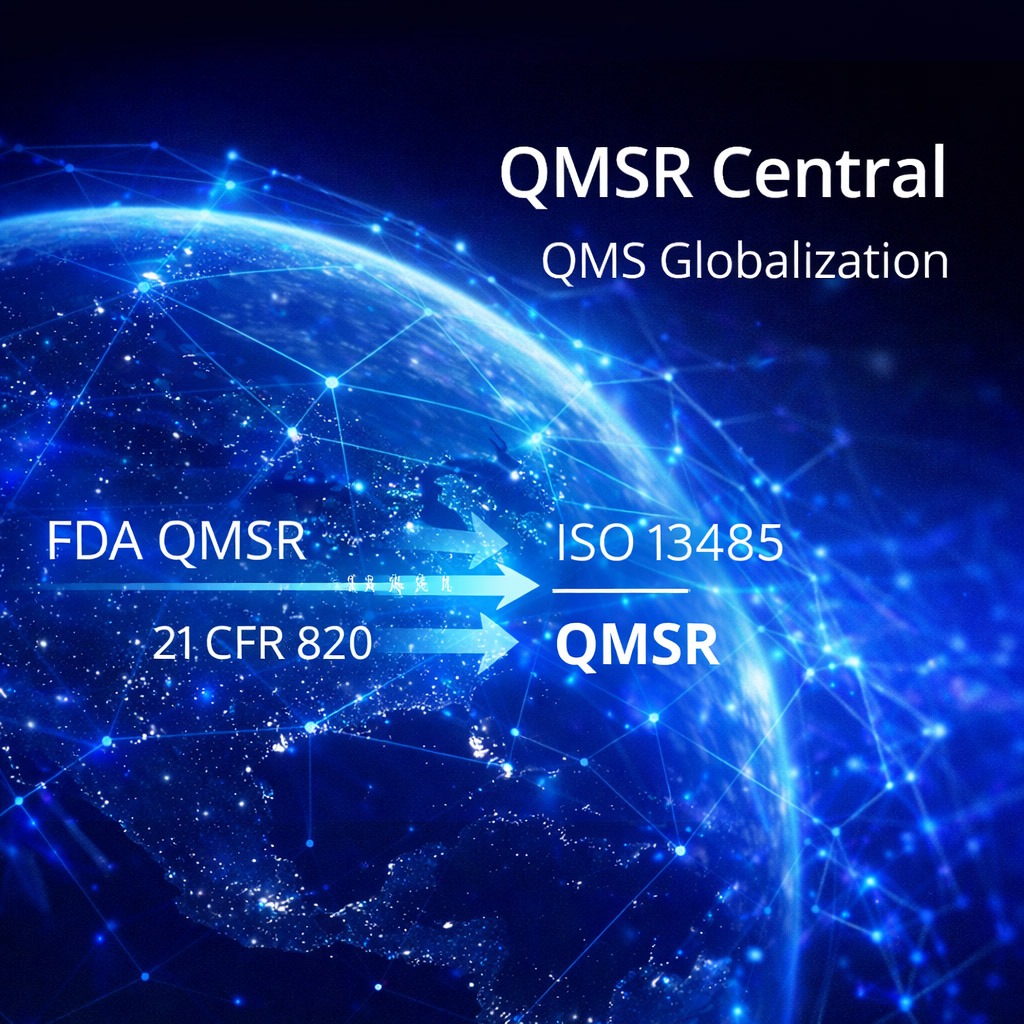
QMS Globalization
QMSR Transition
Transitioning from QSR to QMSR: A Practical, Risk-Based Approach
Transitioning to the FDA’s Quality Management System Regulation (QMSR) is not a one-size-fits-all exercise. While the regulation aligns with ISO 13485:2016, the path to compliance depends heavily on your organization’s current state.
Some manufacturers already operate under both the Quality System Regulation (QSR) and ISO 13485. Others remain primarily QSR-based. Still others are early-stage companies building a quality system for the first time.
Each of these starting points requires a different implementation strategy, but all must ultimately meet the same FDA expectations for QMSR compliance.
Start with Your Current State
A successful transition begins with an honest assessment of where you are today.
QSR and ISO 13485 Compliant Organizations
If your organization is already compliant with both QSR and ISO 13485, you are well positioned but not finished. ISO alignment provides a strong structural foundation, but QMSR compliance requires more FDA-related integration. FDA expects alignment with FDA-specific terminology and expectations, documentation that is inspection-ready for FDA investigators, integration of postmarket surveillance and complaint handling aligned with U.S. enforcement practices, and adjustment to FDA inspection depth, which differs from ISO audits.
ISO compliance reduces effort but does not eliminate the need for a QMSR-specific transition.
QSR-Only Organizations (Not ISO 13485 Compliant)
Organizations operating primarily under QSR face a more substantial transformation. For those companies, this is not simply a regulatory update. It is a system redesign.
The transition requires adoption of ISO-based structure and terminology, integration of risk management across the lifecycle, formalization of training, competency, and documentation systems, and expanded focus on data integrity and continuous improvement.
This group faces the largest lift but will also see the greatest long-term benefit.
Emerging or Early-Stage Manufacturers
For startups or small manufacturers, QMSR presents a unique opportunity to build directly your QMS into a modern, globally aligned system. Small companies should avoid trying to retrofit legacy QSR structures and instead integrate risk, design, and quality from the outset.
For emerging manufacturers, alignment with QMSR can become a competitive advantage.
Core Implementation Strategy
Regardless of starting point, successful transitions follow a structured, phased approach.
Phase 1: Gap Assessment and System Mapping
The transition begins with a QMSR-focused gap analysis.
This begins with mapping existing procedures to ISO 13485/QMSR clauses. Then, do a gap analysis to identify missing or misaligned elements, followed by an evaluation of the completeness and traceability of existing documentation. And finally, review gaps and prioritize them based on regulatory risk.
This exercise is also recommended for ISO-certified organizations who will benefit from a targeted QMSR gap audit.
Phase 2: Governance and Project Structure
Establish a cross-functional transition team, including Quality Assurance, Regulatory Affairs, Design and Development, Operations and Manufacturing, Supplier Quality, and Human Resources (training and competency).
This team will own the transition roadmap and ensure alignment across the organization.
Phase 3: Training and Capability Development
QMSR introduces expectations that may require new competencies. Critical training areas include ISO 13485 principles, ISO 14971 risk management, internal auditing, continuous improvement, and FDA inspection expectations.
Organizations often benefit from a train-the-trainer model, building internal expertise for long-term sustainability.
Phase 4: Phased System Implementation
Implementation should proceed in logical phases, balancing progress with ongoing QSR compliance. Opportunities for early integration include the establishment of a risk management framework, an analysis and improvement of the documentation structure, and alignment of vocabulary with QMSR requirements.
Subsystem Implementation
Next comes the implementation of key subsystems like training and competency systems, production and process controls, supplier and purchasing controls, and design and development integration.
High-Risk Areas (Require Focus)
Place an increased focus on high-risk quality system functional requirements like complaint handling and postmarket surveillance, CAPA effectiveness and data analysis, and risk management across the product lifecycle.
Phase 5: FDA-Specific Alignment
This is where many organizations underestimate the effort. Even ISO-aligned systems must be adapted to FDA terminology (e.g., Device Batch Record, Design and Development File), FDA expectations for traceability and documentation depth, U.S.-specific postmarket reporting requirements, and inspection readiness under evolving FDA inspection models.
This is the critical bridge between ISO compliance and FDA enforcement reality.
Phase 6: Final Readiness and Validation
The QMSR became effective on February 2, 2026. Organizations that have not completed a significant transition to a QMSR-compliant QMS should conduct a full internal audit to QMSR requirements, verify training completion and system adoption, validate risk management integration, and finalize the Quality Manual and documentation structure.
Organizations may need to maintain dual compliance (QSR- and QMSR-ready systems) during the transition period.
Differing Transition Approaches (Strategic Insight)
In practice, manufacturers are adopting different transition philosophies. A minimalist approach that only includes updates to terminology and documentation, and superficial risk compliance. This approach will lead to inspection vulnerability.
A better approach than a minimalist strategy is phased integration that establishes a balance between risk and resource management and is aligned with business requirements and operations. We recommend a risk-based phased approach as the most sustainable transformation path.
The final option is a full system transformation where there is rapid alignment to ISO/QMSR across all systems. This approach requires high resource demand but offers strong long-term positioning.
Common Pitfalls
Across all organization types, recurring issues with transition implementations include assuming ISO certification equals QMSR compliance, underestimating FDA inspection expectations, treating QMSR as a documentation exercise rather than a system transformation, and failing to integrate risk management across processes.
Clauses 1-3 Product Realization
Scope, References, Definitions
Clause 4 Quality Management System
Structural and operational expectations
Clause 5 Management Responsibility
Leadership’s role in an effective QMS
Clause 6 Resource Management
Identify, provide, and maintain resources
Clause 7 Product Realization
The operational core of the QMS
Clause 8 Measure, Analyze, Improve
Risk, monitoring, and improvement

Available in paperback and eBook formats on Amazon.
Click on the image or this link to see the book on the Amazon website.