Regulatory Data Architecture
Modern regulatory operations depend on accurate, structured, and traceable data. Each product may carry multiple identifiers, market authorizations, country-specific variations, renewal timelines, and post-market obligations.
Without defined data architecture, this information becomes fragmented, inconsistent, and difficult to reconcile.
A Regulatory Information Management System (RIMS) establishes a coherent architecture for regulatory data, transforming disconnected documents into a structured, governed system of record.
From Documents to Data
Traditional regulatory environments rely heavily on documents like submissions, approvals, correspondence, and reports, stored across shared drives and local systems. While necessary, documents alone do not provide visibility, control, or scalability.
RIMS shifts regulatory operations toward a data-centric model, where key regulatory elements are structured, linked, and managed systematically. This enables organizations to track not just documents, but the relationships between products, submissions, approvals, and regulatory commitments.
Core Regulatory Data Model
At the center of regulatory data architecture is a structured model that organizes products (global and market-specific variants); registrations and authorizations (by country and jurisdiction); regulatory submissions (510(k), PMA, De Novo, EU MDR, etc.); submission lifecycle states (planned, submitted, approved, renewed, withdrawn); regulatory commitments and post-market obligations; labeling and claims alignment; and change history and version control
These elements are not independent; they are interlinked and interdependent. A change to a product, labeling, or manufacturing process may trigger regulatory updates across multiple markets. A well-designed architecture ensures those relationships are visible and actionable.
Submission Lifecycle Management
Every regulatory submission exists within a broader lifecycle: it is planned, prepared, submitted, reviewed, approved, amended, renewed, and sometimes withdrawn. Over time, a single product may accumulate dozens of regulatory interactions across multiple jurisdictions.
RIMS provides lifecycle visibility across all submissions, enabling organizations to track what has been submitted, what is under review, what requires renewal, and what commitments remain open. This reduces reactive management and supports proactive regulatory planning.
System of Record and Data Governance
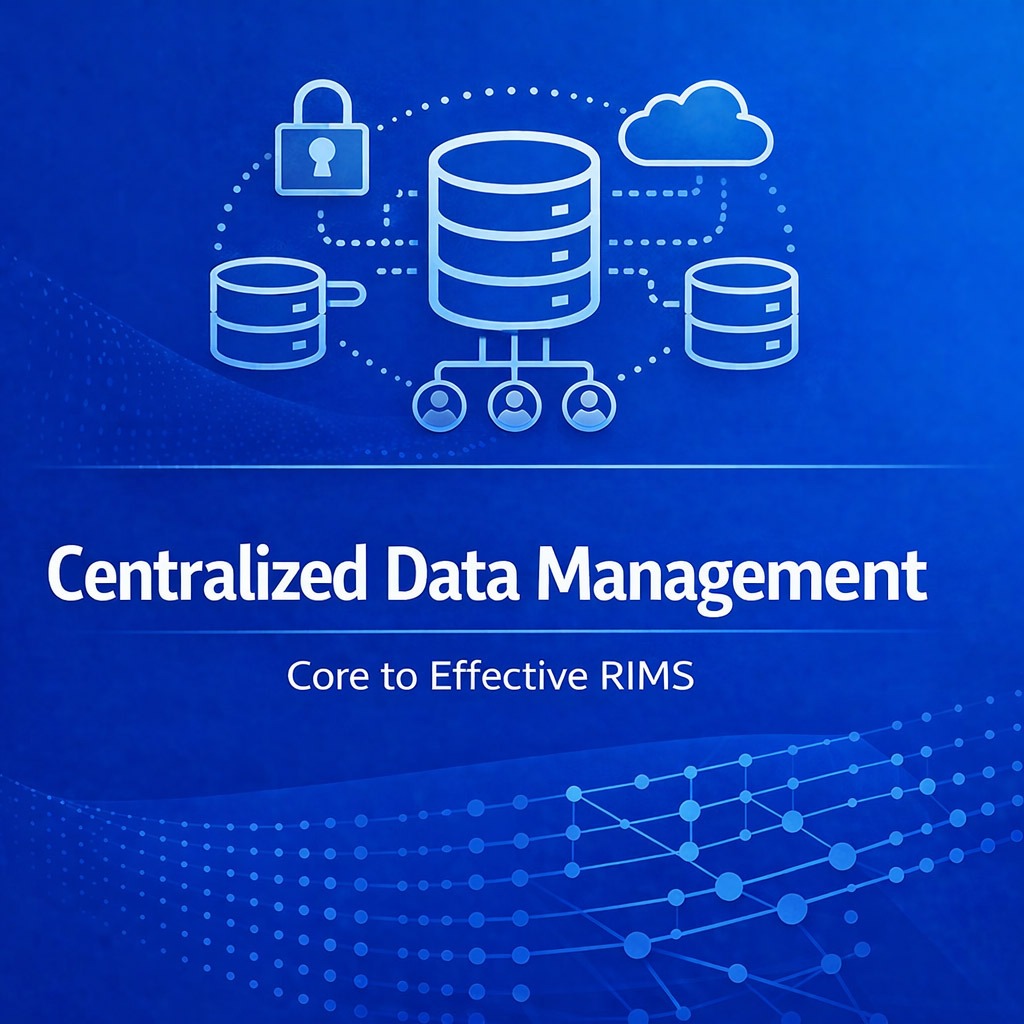
A well-implemented RIMS functions as the system of record for regulatory data. This requires clear governance, including defined data ownership and responsibility, standardized data structures and naming conventions, controlled change management processes, audit trails and traceability, and alignment with quality system documentation.
Without governance, even the most advanced system becomes unreliable. With governance, regulatory data becomes defensible, consistent, and inspection ready.
Cross-Functional Integration
Regulatory data intersects continuously with quality systems (CAPA, complaints, audits), design and development activities, clinical investigations, manufacturing changes, labeling updates, and commercial expansion.
RIMS provides a structured interface between regulatory affairs and these functions. When changes occur, regulatory impact can be assessed systematically, reducing communication gaps and preventing compliance failures.
Responding to Global Regulatory Complexity
Regulatory expectations are increasingly interconnected across global markets, including FDA requirements and QMSR alignment, European Union MDR and IVDR, global harmonization initiatives like increased focus on risk management and expanding post-market surveillance obligations.
These frameworks demand consistency, traceability, and visibility across jurisdictions. A structured regulatory data architecture enables organizations to manage global requirements in a coordinated manner, rather than responding to each region in isolation.
From Fragmented Tracking to Structured Control
Organizations typically evolve through stages, from fragmented (spreadsheets, disconnected documents, limited visibility) to partially structured (some systems, inconsistent data governance) and architected, with centralized RIMS, defined data models, and controlled processes.
Progressing to an architected state reduces risk, improves efficiency, and supports scalable growth.
Strategy Before Technology
RIMS should not be implemented as a standalone software purchase. Organizations benefit most when they first define their regulatory data architecture, roles and responsibilities, submission lifecycle processes, cross-functional integration points, and global regulatory strategy.
When approached strategically, RIMS becomes more than a tracking tool. It becomes a framework for regulatory governance, operational discipline, and long-term scalability.
Next Step
If your organization is evaluating RIMS or struggling with fragmented regulatory data, a structured assessment is the first step toward building a scalable and compliant regulatory system. Check your RIMS readiness with our readiness assessment tool.