Building a RIMS-Ready Regulatory Foundation
Regulatory Information Management Systems (RIMS) are often associated with large, multinational organizations managing complex global portfolios. In practice, small and emerging manufacturers frequently have more to gain from establishing structured regulatory systems early.
For a growing medical device, biotech, or pharmaceutical company, regulatory information is not just documentation, it is business continuity.
From Spreadsheets to Structure
In early-stage organizations, regulatory responsibility is often concentrated within a single individual or small team. Information may be distributed across spreadsheets, shared drives, email folders, or consultant-managed files. While this may appear manageable in the early phases, it introduces hidden risk.
Critical knowledge may reside with one person. Submission histories can be difficult to reconstruct. Renewal timelines depend on manual tracking. Labeling versions may lack full traceability.
As the organization grows, these gaps become increasingly difficult, and costly, to correct.
The objective at this stage is not to implement enterprise-scale systems. It is to establish structure, visibility, and control.
Regulatory Data as a Business Asset
Regulatory data is often treated as supporting documentation. In reality, it is a core operational asset that directly affects an organization’s market access, revenue continuity, inspection readiness, and investment outcomes.
A structured approach to regulatory information transforms fragmented records into a managed, traceable system of record, even before a full RIMS is implemented.
Reducing Single-Point-of-Failure Risk
In small organizations, regulatory knowledge is frequently concentrated in one individual, typically an internal resource or external consultant. If that person becomes unavailable, critical information may be incomplete or inaccessible during key events such as audits, inspections, or submissions.
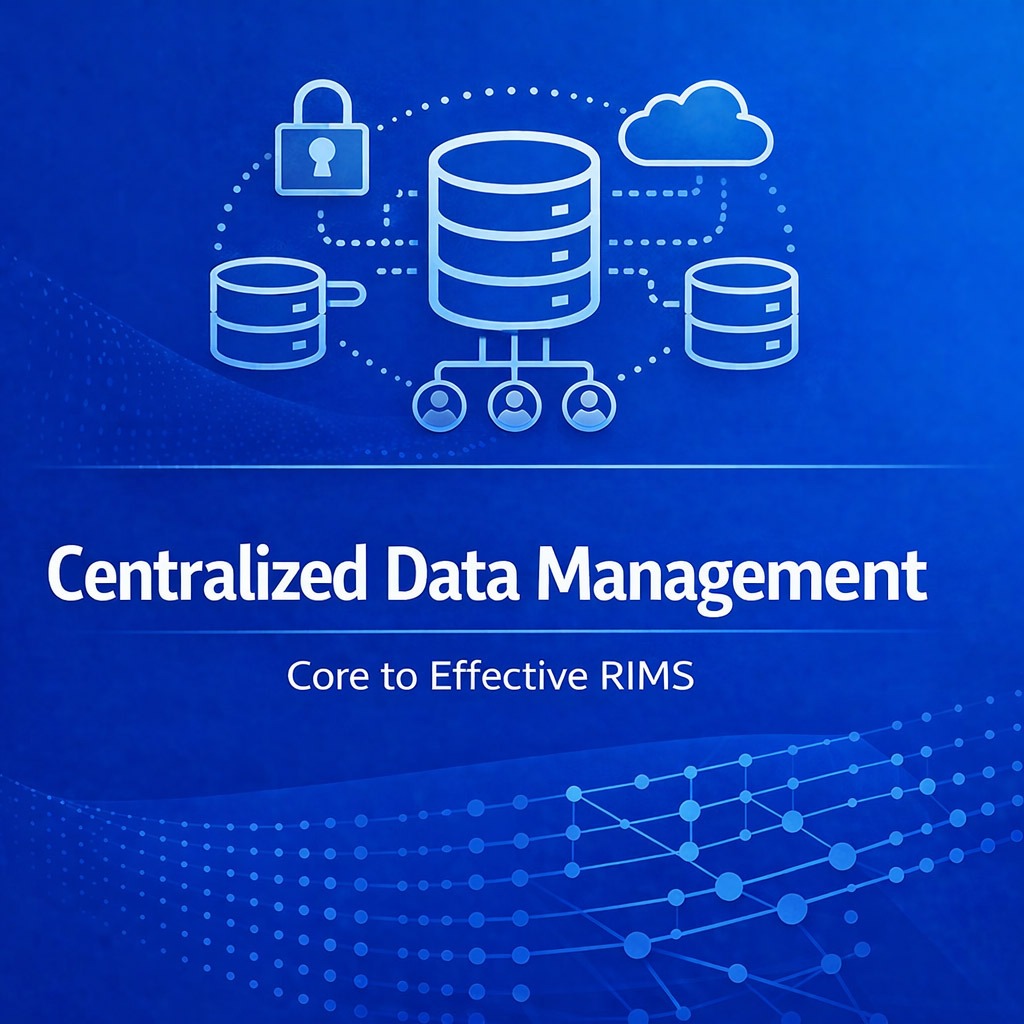
A centralized regulatory data structure reduces dependency on institutional memory by capturing product registration status, submission and approval history, regulatory commitments, renewal timelines, and labeling versions.
This is not simply an efficiency gain, it is a resilience strategy.
Supporting Investment and Due Diligence
Emerging manufacturers often pursue venture capital funding, strategic partnerships, licensing agreements, and acquisition.
During due diligence, regulatory maturity is closely examined. Investors and partners expect clear answers to questions such as How are global registrations tracked? How are renewals managed? How are regulatory commitments monitored,? And how is labeling consistency controlled?
When regulatory information is managed informally, it introduces uncertainty.
Even a structured, right-sized regulatory system signals governance discipline, operational maturity, and scalability, factors that can materially influence valuation and partnership decisions.
Enabling Controlled Growth
Many companies begin with a single product and a single market. Expansion often occurs rapidly.
New markets introduce additional requirements, including country-specific registrations, renewal timelines, labeling variations, and post-market obligations. Without structured regulatory data, expansion becomes reactive and prone to error.
Establishing a RIMS-ready foundation early allows organizations to scale with clarity and maintain visibility across global product status and regulatory obligations.
Avoiding Costly Compliance Failures
For large organizations, compliance lapses may be absorbed as operational setbacks. For small companies, a missed renewal, lapsed registration, or untracked commitment can disrupt revenue, halt distribution, or damage investor confidence.
Structured regulatory tracking helps prevent missed submission deadlines, expired registrations, inconsistent labeling across markets, and unmanaged regulatory commitments.
In many cases, the cost of a single failure may exceed the cost of implementing structured regulatory data management.
Supporting External Partners
Small and emerging manufacturers often rely on regulatory consultants, contract manufacturers, authorized representatives, and clinical and development partners.
Without a centralized system, regulatory information may become fragmented across these relationships. A structured regulatory data environment ensures that the company, not external parties, retains ownership, visibility, and control of its regulatory record.
Right-Sized Implementation
A small company does not need enterprise-scale complexity. A RIMS-ready foundation typically focuses on structured product and registration records, submission and approval tracking, renewal alerts and timelines, regulatory commitment management, and controlled access and visibility.
Modern cloud-based platforms allow these capabilities to scale alongside organizational growth. Because the objective is not complexity, it is clarity and control.
Regulatory Maturity Is Not a Function of Size
Organizations operating under frameworks such as FDA QMSR, ISO 13485, and EU MDR are expected to demonstrate traceability, structured oversight, and documented change control.
These expectations apply regardless of company size. A structured regulatory system supports inspection readiness and compliance discipline from the earliest stages of growth.
A Practical Maturity Path
Most organizations evolve through stages, from ad hoc, with spreadsheets and disconnected records, to structured tracking, with more defined ownership and consistent records.
The next stage is RIMS-ready, with the data model and lifecycle visibility established, then RIMS-enabled with a centralized system of record, until it reaches a stage of integration with full cross-functional regulatory ecosystem.
The goal is not to accelerate prematurely, but to build a foundation that supports progression.
MDP Perspective
For small and emerging manufacturers, RIMS is not about implementing enterprise software. It is about establishing regulatory discipline before complexity creates vulnerability.
Organizations that build structured regulatory systems early are better positioned to scale into new markets, support investment and partnership activities, maintain continuity of compliance, reduce operational risk, and operate with transparency and control.
The question is not whether a company needs a large system. The question is whether regulatory information will be managed informally, or professionally.
Next Step
If your organization is evaluating RIMS or struggling with fragmented regulatory data, a structured assessment is the first step toward building a scalable and compliant regulatory system. Check your RIMS readiness with our readiness assessment tool.