
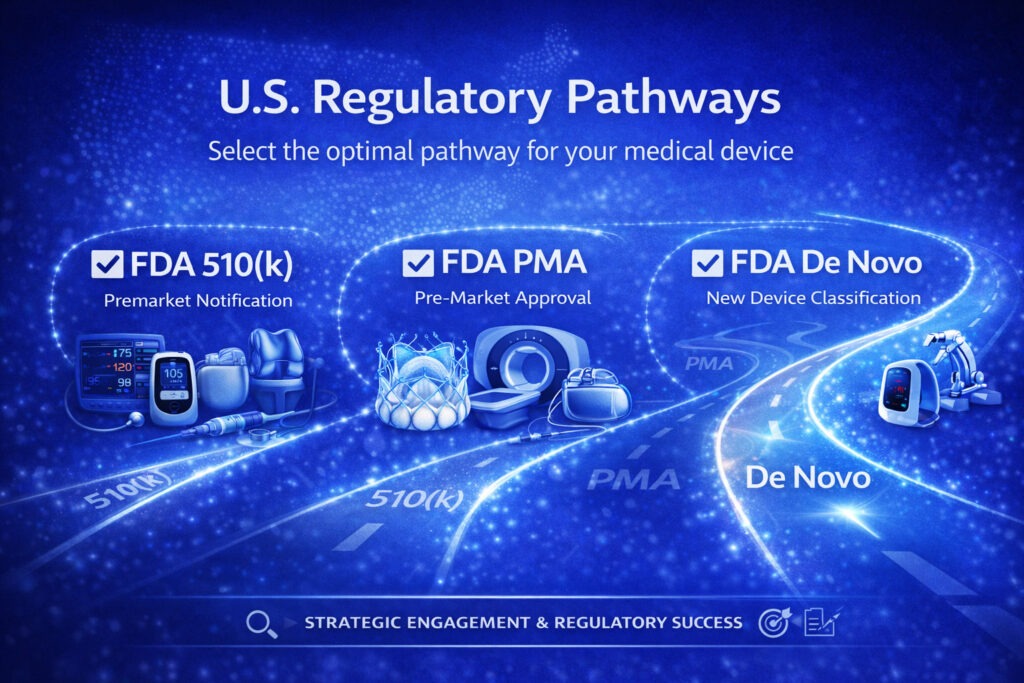
Pathways for U.S. Medical Device Marketing Entry
Entering the U.S. medical device market requires a clear understanding of regulatory classification, submission pathways, and quality system requirements under the FDA framework. A medical device cannot be marketed or sold in the United States until it meets applicable requirements established by the U.S. Food and Drug Administration (FDA).
The level of regulatory control, and the pathway to market, depend on the device’s intended use, technological characteristics, and potential risk to patients and users. And while the U.S. market offers significant opportunity, it is also one of the most scrutinized regulatory environments in the world. Success depends on selecting the correct pathway, preparing complete and consistent documentation, and aligning quality systems with regulatory expectations.
For lower-risk devices, the FDA may grant exemptions from premarket submission requirements. For moderate- and high-risk devices, manufacturers must demonstrate safety and effectiveness through structured regulatory pathways whose rigor increases with risk.
Understanding these pathways is essential. Not only for compliance, but for efficient product development, successful market entry, and long-term commercial viability.
U.S. FDA Pathways to Market
There are three primary pathways that allow a medical device to be legally marketed in the United States:
Device Exemptions
Certain low-risk devices (generally Class I and some Class II) are exempt from premarket submission requirements.
While exempt devices do not require FDA clearance or approval prior to marketing, they are still subject to important regulatory controls, including establishment registration and device listing, quality system requirements (QMSR), labeling requirements, and Medical Device Reporting (MDR).
Exemption does not mean “unregulated.” Manufacturers remain responsible for ensuring compliance and product safety.
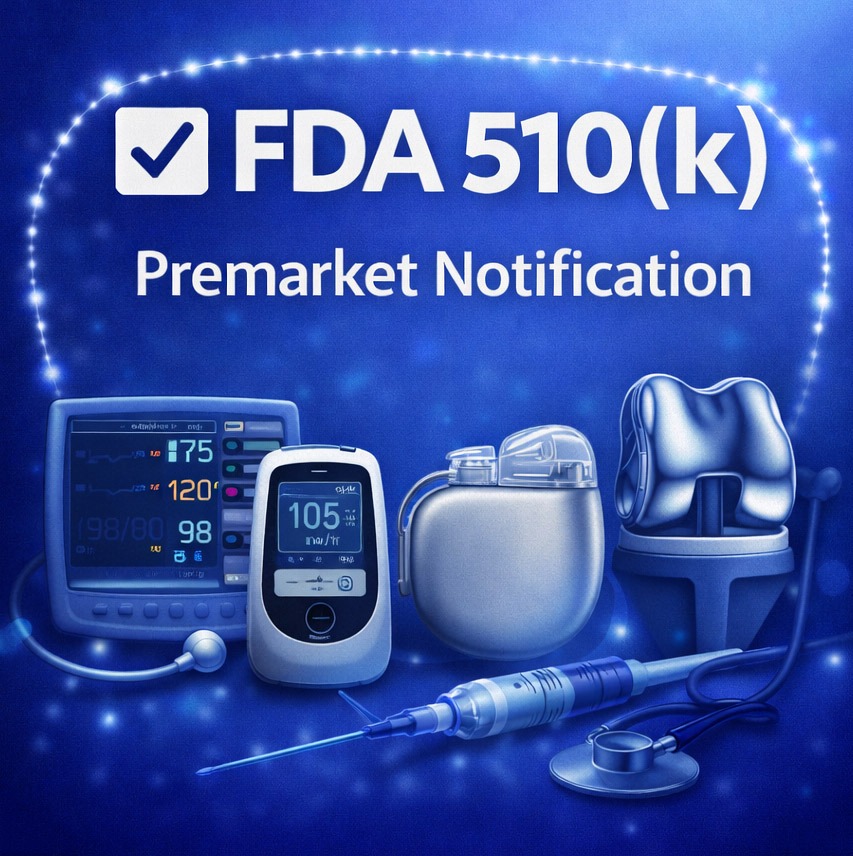
Premarket Notification – 510(k)
The 510(k) pathway is the most common route to market for medical devices in the United States. Under this pathway, a manufacturer must demonstrate that a device is substantially equivalent to a legally marketed predicate device.
Key elements of a 510(k) submission include a device description and intended use, comparison to legally marketed predicate device(s), performance testing (bench, software, biocompatibility, etc.), and labeling, to include instructions for use.
A successful 510(k) results in FDA clearance, allowing the device to be marketed. The quality of the submission and the regulatory strategy behind it directly affects review timelines and the likelihood of additional information requests.

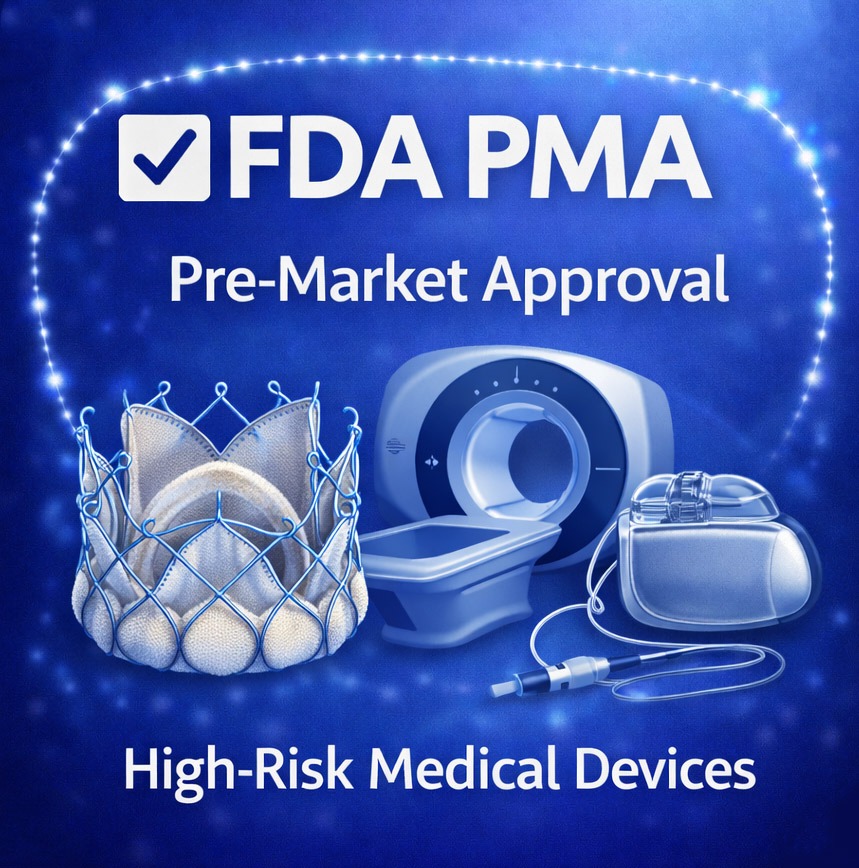

Premarket Approval (PMA)
The PMA pathway is required for Class III devices. In other words, medical devices that support or sustain life, are implanted, or present significant risk. PMA is the most rigorous FDA pathway and requires valid scientific evidence demonstrating safety and effectiveness.
PMA submissions are resource-intensive and require careful planning, execution, and regulatory alignment. Typical PMA requirements include clinical study design and execution, clinical data, detailed device design and manufacturing information, risk analysis and mitigation strategies, comprehensive labeling, and intensive interaction with the FDA.
Approval is granted only after the FDA determines that the benefits of the device outweigh its risks.
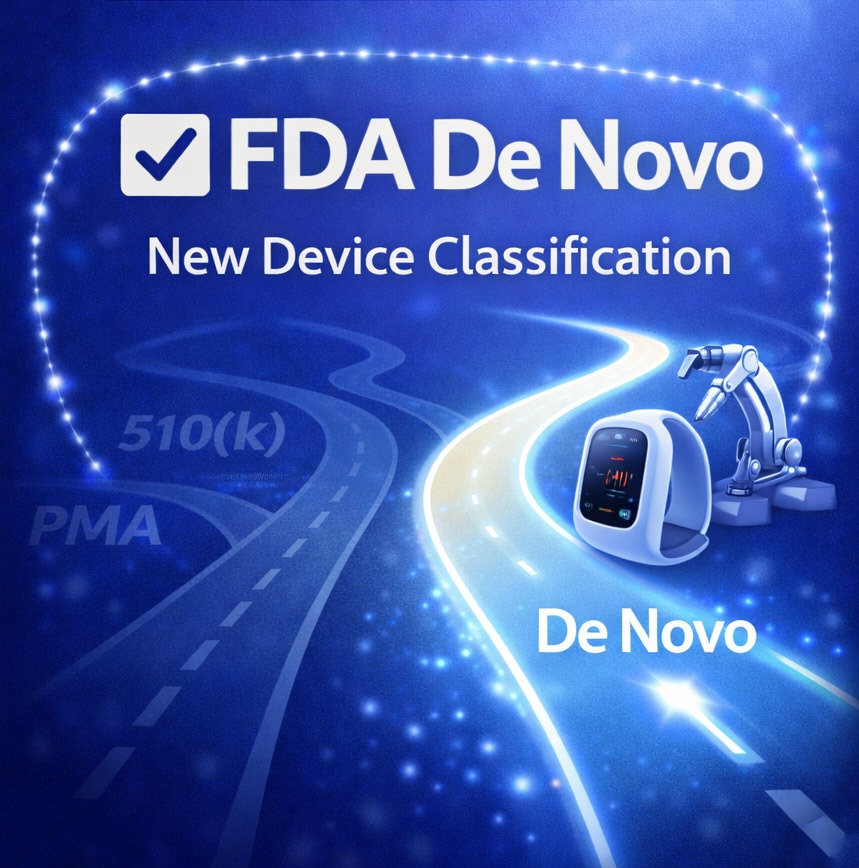
De Novo Classification (Emerging Pathway)
For novel devices without a suitable predicate, the De Novo pathway provides a mechanism to classify a device as Class I or II based on risk. This pathway allows manufacturers to establish a new device classification, avoid unnecessary PMA requirements, and create a future predicate for similar devices.
Key considerations for a De Novo request include the justification of risk classification, comprehensive performance and safety data, a clear benefit-risk profile, and development of special controls.
De Novo has become an increasingly important pathway for innovative technologies.
How MDP Supports Medical Device Approvals
We support manufacturers across the full regulatory lifecycle, including regulatory pathway strategy and planning, FDA submission support (510(k), PMA, De Novo), QMSR transition and ISO 13485 alignment, global regulatory strategy and market expansion, and labeling and compliance review.
Our focus is on delivering practical, efficient, and compliant solutions that support both regulatory success and business objectives.
Conclusion
Medical device approvals are not a single event. They are part of an ongoing regulatory lifecycle that spans development, market entry, and post-market oversight. Success requires more than meeting requirements. It requires an understanding of the system, selecting the right regulatory pathway, and executing with precision.