Demonstrating Safety and Effectiveness for High-Risk Medical Devices
For high-risk medical devices, entry into the U.S. market requires the most rigorous level of regulatory review is the FDA’s Premarket Approval (PMA) pathway. Premarket Approvals are required for Class III devices, those that support or sustain human life, are implanted, or present a potential unreasonable risk of illness or injury.
Unlike the 510(k) pathway, which demonstrates substantial equivalence, PMA requires independent demonstration of safety and effectiveness, typically supported by well-controlled clinical investigations.
What Is a PMA?
Premarket Approval (PMA) is the U.S. Food and Drug Administration’s most stringent process for evaluating medical devices. It is required for Class III devices, which are those that support or sustain human life, are of substantial importance in preventing impairment of human health and present a potential unreasonable risk of illness or injury.
Because of the level of risk associated with these devices, the FDA has determined that general and special controls alone are insufficient to assure safety and effectiveness, so these devices require formal PMA approval prior to marketing.
Scientific Standard for Approval
Unlike other pathways, PMA is not based on comparison to existing devices. Approval requires valid scientific evidence demonstrating reasonable assurance of safety and effectiveness for the device’s intended use. This evidence typically includes clinical data from well-controlled studies, supporting nonclinical testing, and comprehensive risk-benefit analysis.
Who Submits a PMA?
The PMA applicant is the entity responsible for the device and the supporting data. This may include device manufacturers, product developers or inventors, corporations or partnerships, academic or research institutions, and government or organizational entities. In most cases, the applicant is the organization that will ultimately manufacture and commercialize the device.
Regulatory Framework
PMA submissions are governed by 21 CFR Part 814, Premarket Approval of Medical Devices. Products that require PMA but do not meet these requirements are considered adulterated under U.S. law and cannot be legally marketed.
When Is a PMA Required?
PMA is required for devices classified as Class III, are high risk and lack an appropriate predicate, or found to be Not Substantially Equivalent (NSE) to existing devices.
Classification and Determination
To determine whether a device requires PMA, consult the FDA’s Product Classification Database to identify classification and regulatory requirements. Devices with existing classifications may include a defined PMA requirement, or, in some cases, no established PMA effective date. If no PMA requirement has been established for certain legacy Class III devices, a 510(k) submission may still be applicable.
Relationship to Other Pathways
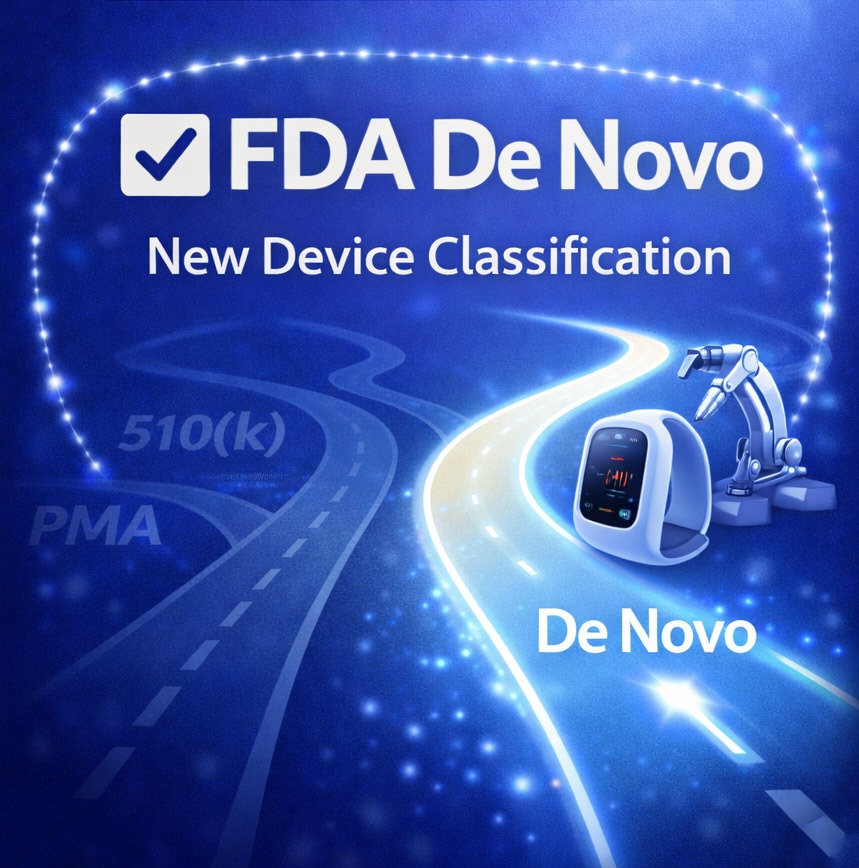
In some cases, devices initially submitted through the 510(k) pathway may receive an NSE determination. Those devices will either require a PMA or, if their risk is moderate, be eligible for De Novo classification. Selecting the correct pathway depends on risk, novelty, and available evidence.
Key Takeaway
PMA is not simply a regulatory submission. It is a comprehensive scientific evaluation process designed to ensure that high-risk medical devices are safe and effective for their intended use.
Request a PMA Pathway Assessment